Policy
HSE procedures and controls.
Documented HSE requirements, task planning, and control measures create the working basis for project execution.
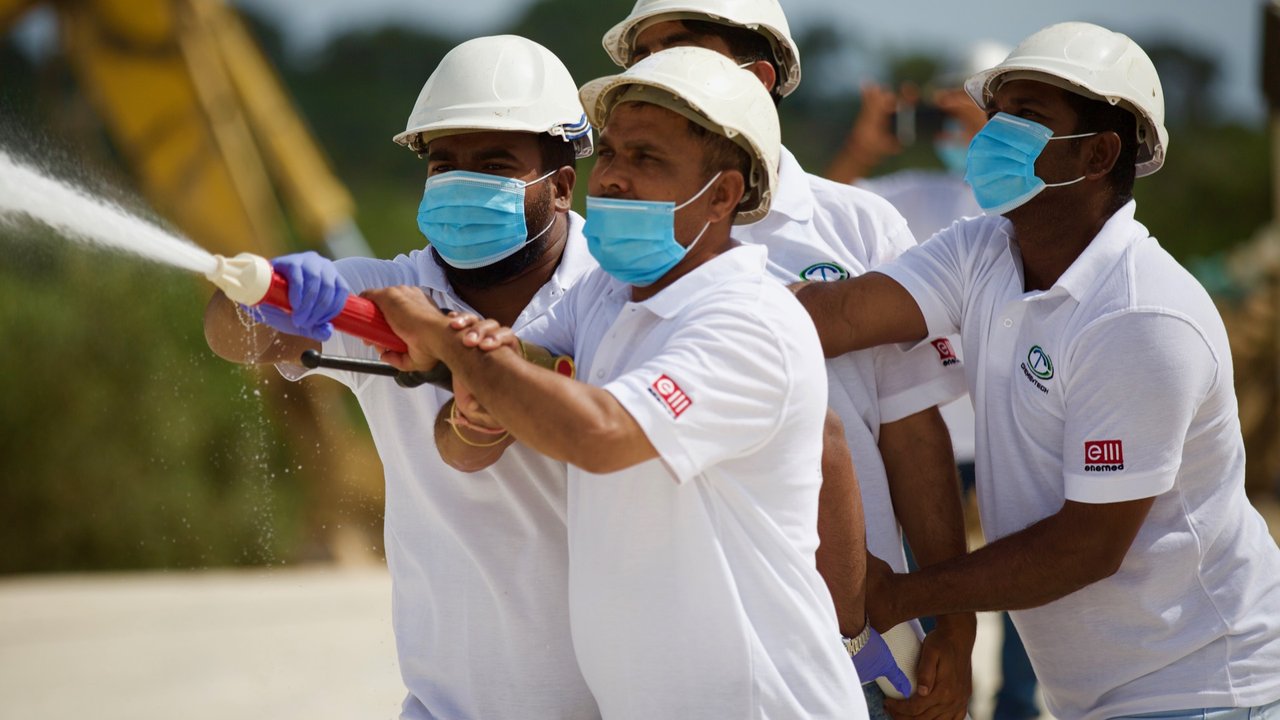
HSE Performance
Project HSE controls include task risk assessment, permit systems, audits, incident reporting and emergency preparedness, adapted to client and site requirements.
HSE System
Chemie-Tech's HSE approach is built around procedures, audits, supervision, incident response, and visible field discipline.
Policy
Documented HSE requirements, task planning, and control measures create the working basis for project execution.
Risk
Risk identification, method reviews, and field control measures are applied before and during execution activities.
Assurance
Routine inspection, corrective action, and management follow-up support continuous HSE visibility.
Response
Incident reporting, response planning, and emergency readiness are integrated into the operating environment.
Reporting Areas
Toolbox talks, inspections, permit checks, audit close-out, training completion, and observation reporting are typical leading indicators in project environments.
Incident data, first-aid cases, recordables, near misses, property damage events, and environmental events are part of normal HSE reporting frameworks.
Routine inspections, supervision checks, audit findings, and closure tracking help translate policy into active site control.
Specific HSE reporting formats and thresholds vary by client standard, contract requirements, project scope, and operating region.
Operational Control
HSE performance is built through planning quality, supervision standards, reporting discipline, and management action across live project conditions.
Method reviews, risk assessments, permits, and task preparation create the first layer of HSE control.
Supervision quality, inspection discipline, and frontline engagement determine whether site controls remain effective during execution.
Observations, incidents, audit findings, and performance reports only add value when they trigger visible follow-up and corrective action.
Emergency planning, response readiness, and escalation clarity are essential in heavy industrial project environments.
HSE Delivery Context
HSE performance is carried across an accumulated base of energy and industrial projects spanning multiple continents and client environments.
Project-specific HSE performance data (manhours worked, TRIFR, LTIR, and incident records) is available on request as part of project pre-qualification and client engagement processes.
Discuss HSE Requirements
For HSE reporting expectations, audit requirements, or site assurance discussions, connect directly with the Chemie-Tech team.